1911 Established is betting that cider’s best days are ahead
By Misty Milioto
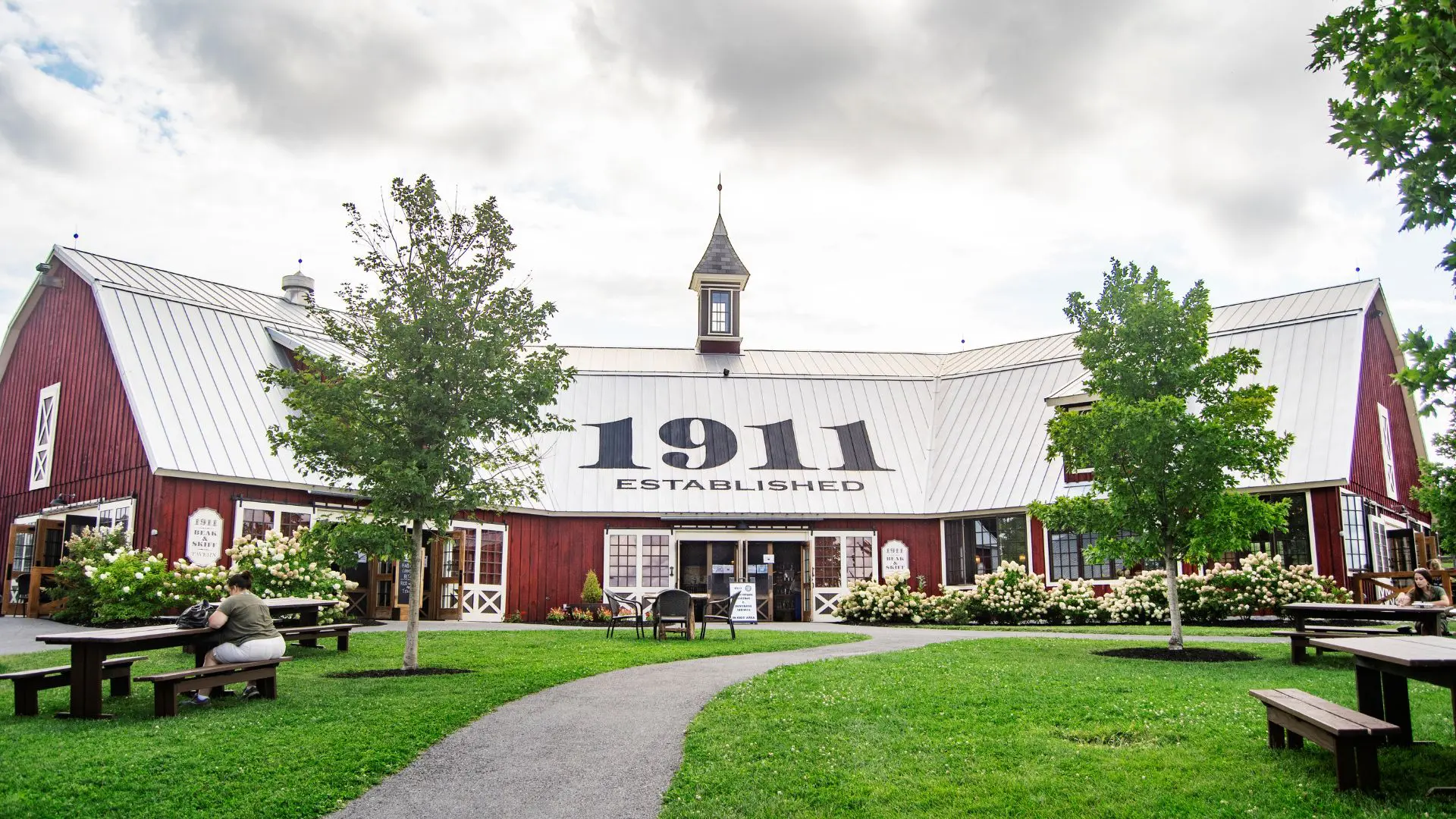
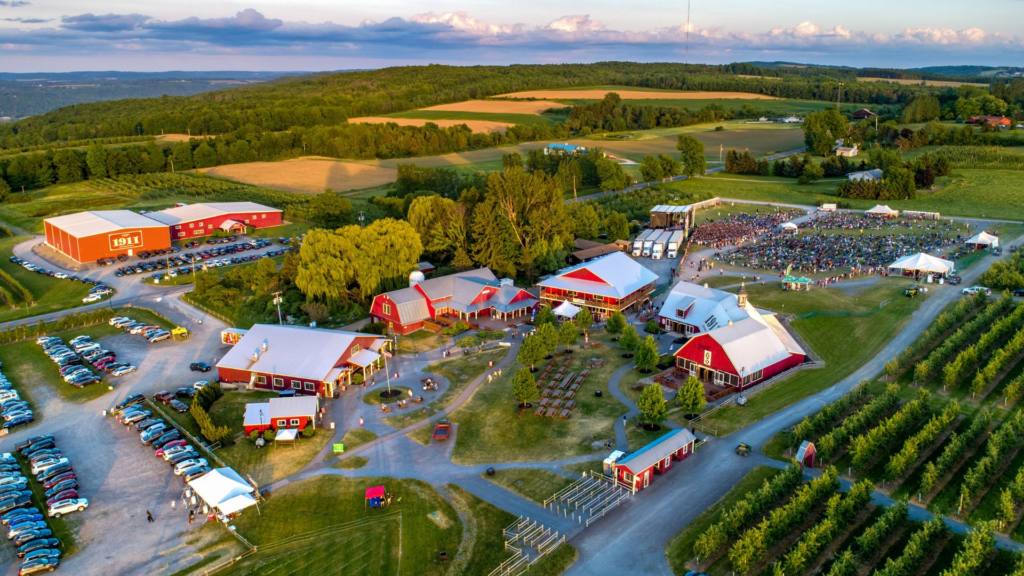
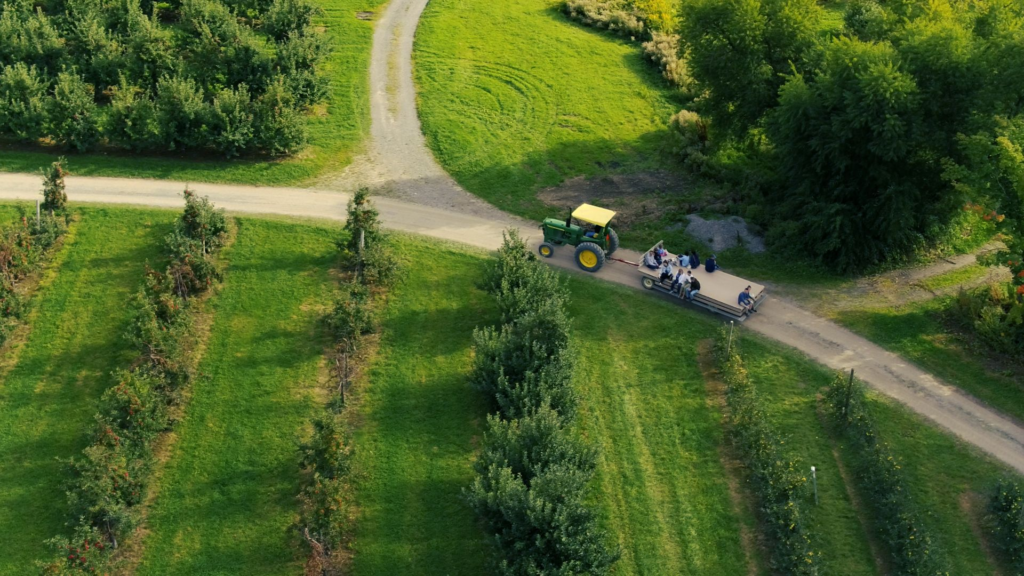
While beer and spirits companies are watching their numbers shrink, Eddie Brennan is watching his grow. Brennan is the president and fifth-generation co-owner of 1911 Established, the hard cider brand built on Beak and Skiff Apple Orchards — a working, family-owned farm in Lafayette, N.Y., that has been producing apples since 1911. Over the past three years, 1911 Established has grown by 60%, reaching $13 million in revenue in 2025. The brand sells in 30 states through retailers including Wegmans, Trader Joe’s and Total Wine, and it recently launched a line of de-alcoholized ciders.
“I am more excited about the hard cider category in the U.S. today than I ever have been,” Brennan says.
The question behind that confidence is also the one driving an increasing amount of conversation across the beverage industry. As Americans drink less, is cider better positioned than its competitors to survive — and even grow?
Brennan thinks the answer is yes. And the reasons he gives are structural, not promotional. He is careful to frame 1911’s growth not as savvy pivoting, but as a consequence of having been in the right place to begin with.
“We’re a 115-year-old working apple farm — cider isn’t a trend for us, it’s where we came from,” he says. “When we started seeing health-conscious consumers gravitating toward lower-ABV, real-ingredient beverages, we were already positioned. We didn’t chase the market; the market came to us.”
That positioning has become increasingly valuable as consumer behavior shifts. Brennan describes a customer who is drinking less often and more deliberately — reading labels, asking about sourcing, making considered choices rather than habitual ones.
“When someone is drinking less, what they do drink matters more,” he says. “They’re not buying on price alone. That plays directly to 1911. We have a real origin story, real ingredients, real heritage.”
The age range also has widened. Younger legal-drinking-age consumers are coming in through the sober-curious and better-for-you lens, while older consumers are moving away from heavier beers and spirits. “The unifying thread is intentionality,” Brennan says. “These aren’t people drinking out of habit.”
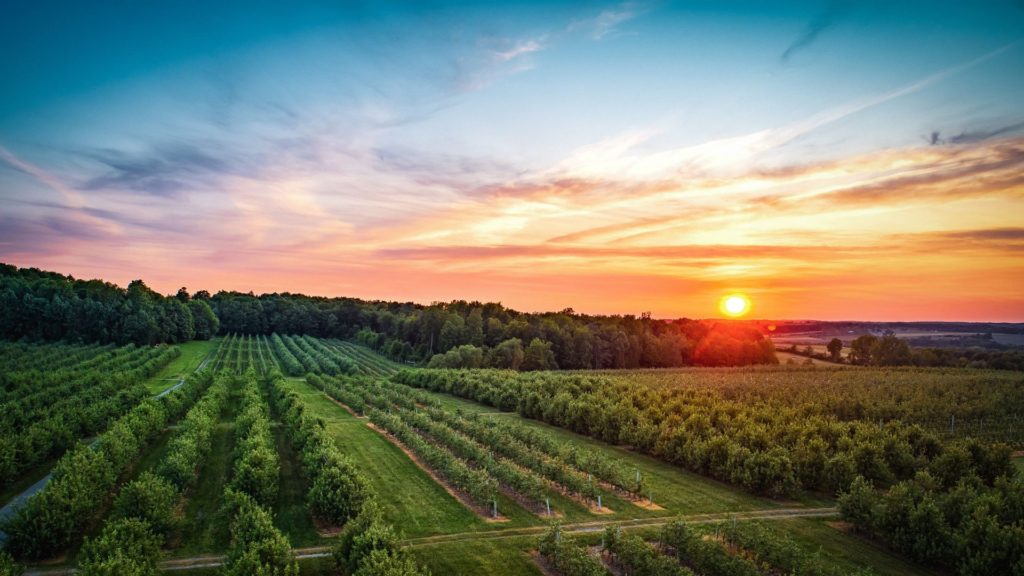
Central to 1911’s story — and, Brennan argues, to cider’s structural advantage more broadly — is the connection to actual land and actual people rather than a brand story manufactured in a marketing meeting. “The fact that I can walk out my back door and stand in the same orchards my great-great-grandfather planted — that’s real,” he says. “Consumers can feel that difference.”
That authenticity, in his telling, is what makes everything else possible. Flavor innovation reads as credible because the farm is the foundation. Distribution works because the story travels with the product. Retail relationships hold because the brand doesn’t need to cheapen itself to get on shelves.
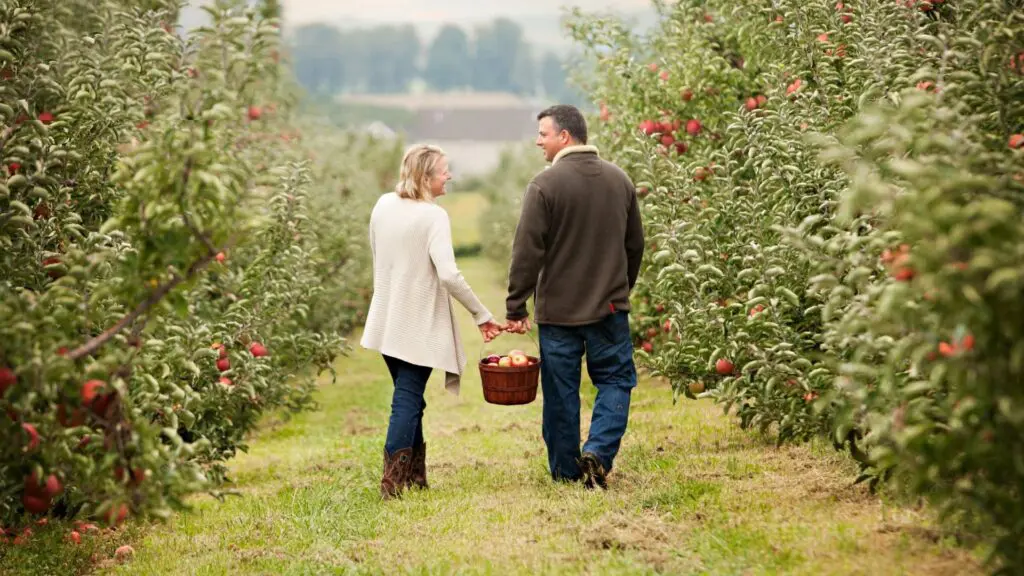
“If we were a brand built in a beverage incubator, the innovations wouldn’t land the same way,” Brennan says. One of his preferred tactics for building distributor and retailer buy-in is straightforwardly literal — by bringing them to the farm. “We spend the day touring the orchard, picking apples and drinking cider,” he says. “It is something they can see, touch and feel.”
Beyond 1911’s own performance, Brennan makes a broader argument for the category’s position relative to beer and spirits in a declining-consumption environment. “Cider sits at a unique intersection,” he says. “It’s naturally gluten-free, it skews lower ABV than spirits, it has real agricultural roots that resonate with ingredient-conscious consumers and it’s genuinely diverse in flavor profile in a way beer has struggled to achieve.”
The category’s small market share — long viewed as a liability — he reframes as upside. “We’re operating in a category where the ceiling hasn’t been defined yet,” he says. “Hard seltzer went from zero to billions in a decade. Cider has category authenticity that neither beer nor hard seltzer has — real agricultural roots, real heritage, a story that holds up under scrutiny.”
Hard seltzer, in particular, he sees as a cautionary tale rather than a threat. “Hard seltzer competed on function — low calorie, low ABV — and got commoditized fast because there was no story underneath it,” Brennan says. “Our consumer isn’t choosing between 1911 and a White Claw. They’ve already graduated from that conversation.”
The biggest misconception holding the category back, he argues, is a flavor perception problem left over from an earlier era of mass-market ciders. “That perception is a remnant of early mass-market ciders that prioritized accessibility over craft,” he says. “The reality is that cider has more flavor diversity than almost any other category — bone dry to off-dry, still to sparkling, single-varietal to hopped. When a buyer or distributor finally tries a well-made dry cider for the first time, the reaction is always the same: ‘I had no idea cider could taste like this.’ ”
If Brennan makes the business case for cider’s moment, Yann Fay — 1911’s director of beverage development and head cidermaker — makes the craft case. Fay has been at the center of what vertical integration actually enables at the production level, and his description of the process suggests a degree of control that most cidermakers simply don’t have access to.
“Working on a vertically integrated farm presents such a unique opportunity for consistency since we have control of every step of the process,” Fay says. The operation runs a two-stage blending system. The first blend happens at the cider mill, where each batch is pressed in a ratio designed to match the style being produced and the second blend occurs post-fermentation at the ciderhouse, where the cellar team assembles the final product from the best available fermented cider at any given time.
The farm also maintains controlled atmosphere storage rooms on-site, allowing the team to hold an ideal apple blend across the production season rather than working with whatever is commercially available on a given day. “Not many people can just order up a custom blend that’ll be delivered in 48 hours,” Fay says. “That’s pretty cool.”
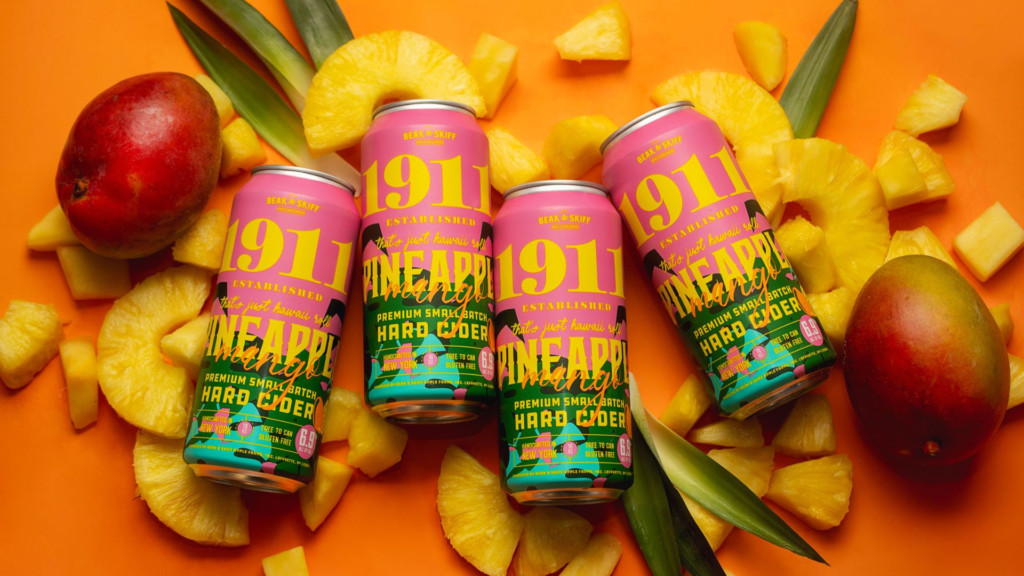
Flavor development is collaborative by design. “Anyone on staff can suggest a new product and then we weigh it as a group [composed] of production, sales and marketing,” Fay says. “Everyone gets a seat at the table.” The portfolio’s range — from Pineapple Mango to the seasonal Candy Corn — is, in his telling, built on a solid foundation. “While our portfolio does have a wide variety of flavors, most of our volume is straight apple from the trees.”
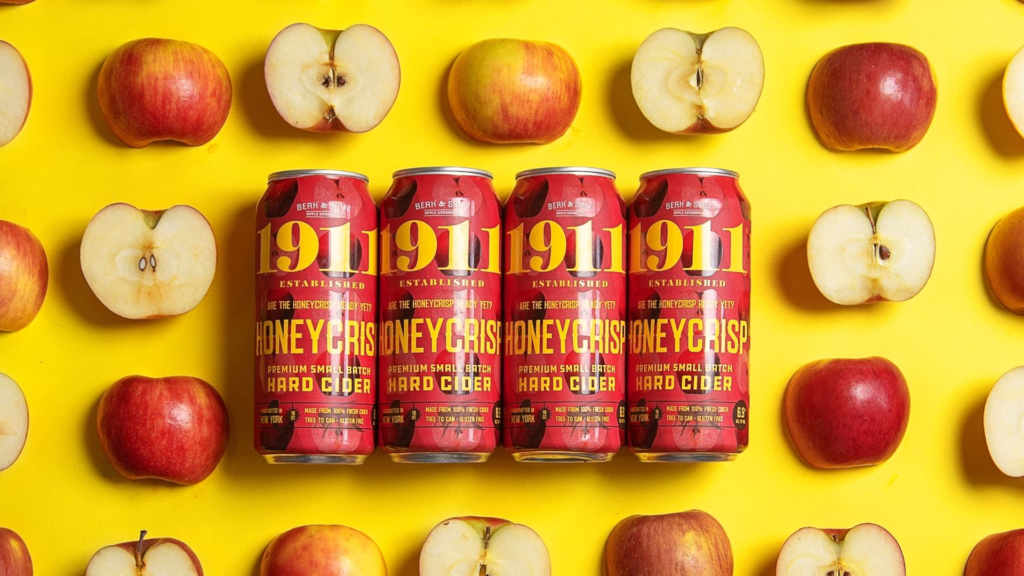
The Honeycrisp single-varietal release exemplifies the farm-forward approach. Honeycrisp apples were not conventionally considered cider apples, but Fay and the team made them anyway — not as a market positioning exercise, but out of genuine enthusiasm for the fruit.
“We just genuinely love Honeycrisp apples, and wanted to make a fun, approachable cider for people that was representative of the variety,” Fay says. He sees it as a way to bring new drinkers into cider through a reference point they already recognize. “It’s a great way to break the ice with new cider customers who may be familiar with various apple varietals in their fruit form but haven’t been exposed to the connection linking apple varietals and cider flavors.”
Perhaps the most technically complex expression of 1911’s current strategy is Clear View, the brand’s line of de-alcoholized ciders. The product was Fay’s project from the start, and the technical challenge was significant — making an alcohol-removed cider that reads as fermented craft rather than sparkling apple juice.
“We wanted to make an alcohol-removed cider for the consumer looking to reduce their consumption while still retaining both the flavor profile and social aspect,” Fay says. The team leveraged in-house expertise in ethanol extraction, separation and non-alcoholic shelf-stability to bring the ABV below 0.5 percent — without using what Fay calls “vinegar or capsaicin shortcuts to mimic the flavor profile.”
The science of why that matters starts with what fermentation actually contributes. Beyond the basic conversion of sugar into alcohol, Fay describes a cascade of minor chemical reactions — the conversion of organic acids, and the development of thiols, mannoproteins and esters — that give a fermented cider its complexity. The decision to go the alcohol-removal route rather than isolate and re-add those volatile flavor compounds, as some technologies do, shaped the entire development process.
“Because we went the ‘alcohol-removed’ route versus the ‘isolate the volatile compounds that make cider taste cider-y and add those to water’ route that some other technologies use, yeast selection and fermentation management was crucial in the development process,” Fay says. “Alcohol-removed cider is primarily concentrating the base cider when you think about it, so any potential flaw becomes magnified.”
The result, he says, has passed double-blind testing; people cannot tell the difference from the alcoholic original.
Brennan frames Clear View’s existence not solely as a trend response, but as the fulfillment of a longer-standing brand value. “Our philosophy has always been that everyone at the table should have a great option — designated drivers, pregnant guests, people who simply choose not to drink,” he says. “The sober-curious movement accelerated the timeline, but the intent was already there.”
For Fay, the non-alcoholic constraint has been more creatively interesting than limiting. “The market is always shifting, and to stay relevant as a brand we have to adapt and grow in harmony with the trends,” he says. “Every challenge is an opportunity. Plus I got to buy new processing toys.”
Looking ahead, Brennan sees geographic and product white space. The Southeast and Southwest are under-penetrated for 1911 — markets where cider is still relatively nascent. On the product side, he sees opportunity in the on-premise channel, in larger format packaging for at-home entertaining, and in the emerging intersection of cider and wellness attributes in the functional beverage space.
“Growth for its own sake has never been the goal,” he says. “The goal is to build a brand that lasts another 115 years.”
That long-term frame shapes how he thinks about the decade ahead. If the less-alcohol trend continues, he believes the brands that endure will be the ones with authentic agricultural roots, consistent craft process and a story that can withstand scrutiny.
“We were here before hard seltzer,” Brennan says. “We’ll be here after whatever comes next. The farm has been producing apples since 1911 — we’re not going anywhere.”