Fine cider has been here all along; the wine world is just catching up
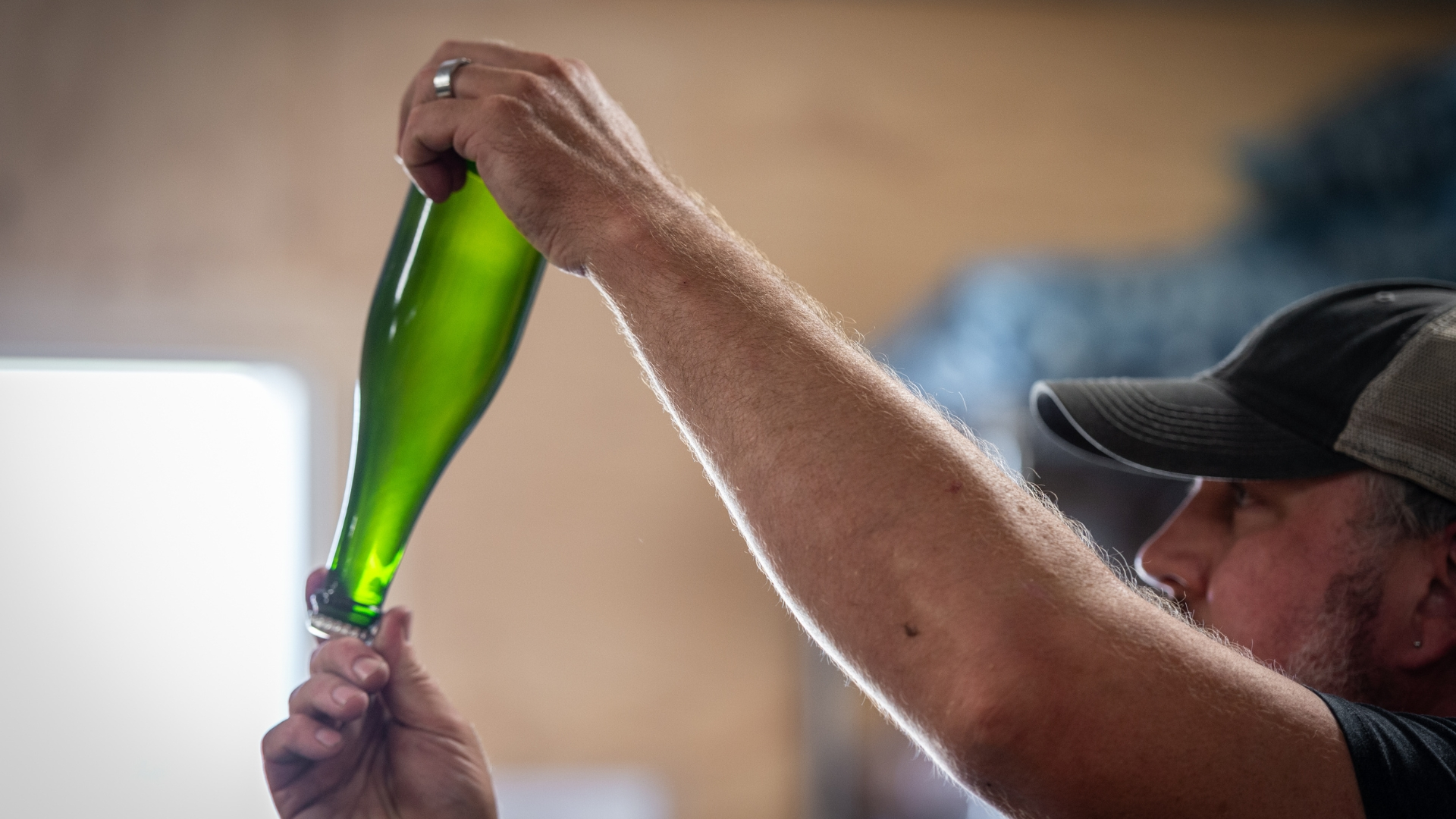
The bottle has been sitting on its side for months, pressed against hundreds of others just like it, the yeast doing the slow, quiet work of a second fermentation. Then comes riddling — the daily rotation, the gradual tipping, the steady accumulation of sediment in the neck. Then disgorgement. The result? A wine that is also a cider, or a cider that is also a wine — depending on who you ask and which side of the border you are standing on.
That question — is it cider, or is it sparkling wine? — is simultaneously becoming one of the more interesting arguments in both categories. In Vermont, Eleanor Léger has been making traditional-method sparkling cider at Eden Specialty Ciders since before the craft cider boom gave the broader category its identity. On the Olympic Peninsula in Washington, cidermaker Chris Weir at Finnriver Farm & Cidery has been hand-turning bottles on riddling racks built by a local boat-builder neighbor for more years than most people have been paying attention to cider at all.
The convergence is real, it is global and — according to the people who have been making cider the longest — it is only the beginning.
Vermont: the long view
Léger did not arrive at the traditional method by following a wine trend. Instead, it was because her customers asked for something specific, and secondary fermentation with disgorgement was the most honest way to give it to them.
Eden Specialty Ciders, based in Newport, Vermont, started with ice ciders, and its best customers were high-end restaurants. After 2011, when cider became a recognized category, Léger asked those restaurant customers what they would want to offer their own guests.
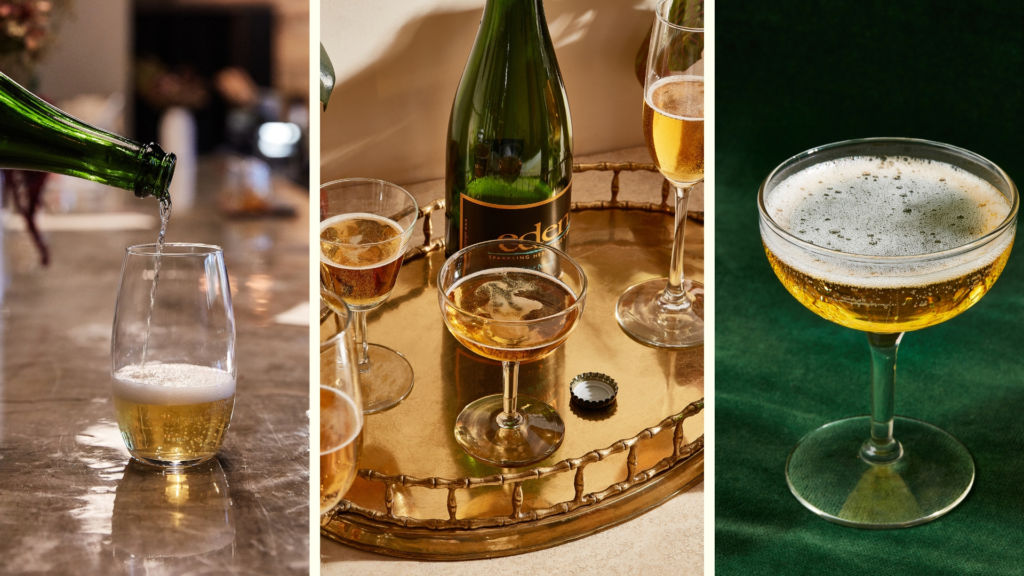
“The reply was pretty uniform — something dry, naturally sparkling and in a small format to make it easier for one person to buy, or to reduce the risk of waste when serving by the glass,” Léger says. The constraints that followed were practical rather than philosophical. “We didn’t have the money to invest in force carbonation equipment, and it didn’t seem in keeping with our hand-crafted, Vermont crunchy approach.”
Pet-nat production was not yet widespread. Leaving sediment in the bottle felt risky for a restaurant market. Secondary fermentation with disgorgement — the same process at the heart of traditional-method sparkling wine — was the answer. Eden produced the resulting cider in 375-milliliter bottles for the next eight years.
The technique, Léger notes, is more accessible at a small scale than most producers assume. One of the places where cider diverges from sparkling wine in the traditional method is at the riddling stage.
“Riddling is not as big of an issue with cider because apples do not contain tartaric acid, which forms those crystals that need to be removed for grape sparkling wine,” Léger explains. “We just shake the bottles and store them upside down in the cartons for the last couple of months.” Eden also did not have a neck freezer in the early years. “We lost a little bit more cider in the disgorging process, but it takes a lot of loss to justify a $15,000 piece of equipment.”
What the drinker receives as a result of that labor is something Léger describes in terms of texture rather than flavor. “The primary benefit is a clean, beautiful texture that is simply unachievable with force carbonation, or by bottle-conditioning without disgorging,” she says. “We do a lot of bottle-conditioning without disgorging where we can also get the same beautiful bubbles with time in bottle — but the last glass is pretty murky with sediment.”
Beyond the technique, Léger points to the apple varieties as the other half of the equation. Access to heirloom and tannic varieties, and the ability to work with them hands-on to develop balanced blends, is, she says, “no small part of the magic.”
Eden is now part of a merged entity with Shelburne Vineyard and Iapetus Wines, which means Léger’s team works alongside still and sparkling winemakers daily. She is measured about what that proximity has changed, and candid about what remains distinct.
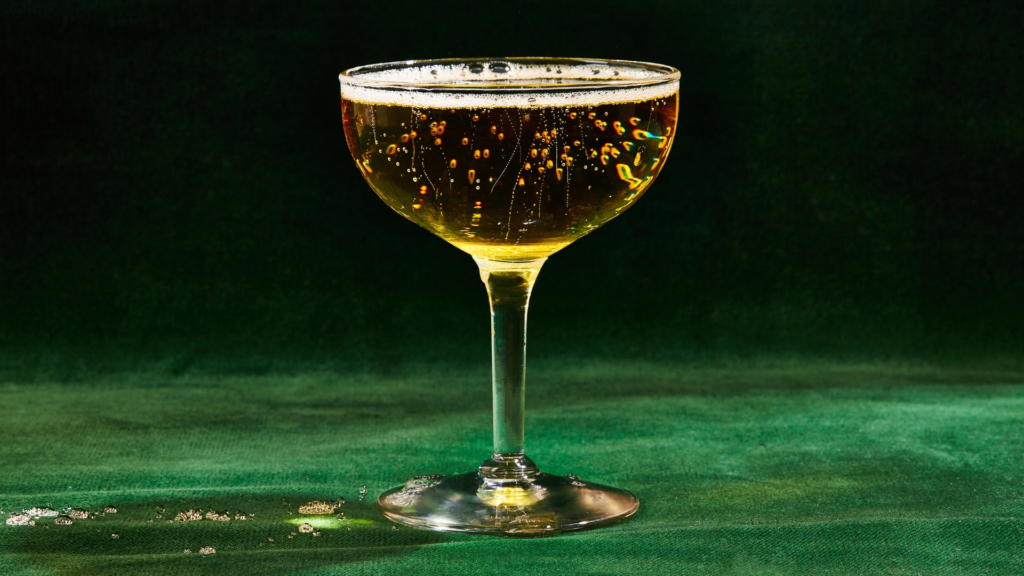
“Cider is much more fragile than wine due to the lower ABV,” she says. The Eden side of the operation, she notes, already knew more about sparkling wine techniques than the winery side — since that is primarily what Eden produces. The more interesting question, she suggests, might be the reverse: whether the wine team now has a better appreciation of apple varieties and sparkling technique.
Washington: patience as practice
Chris Weir’s relationship with the traditional method predates his winemaking career entirely. He made his first batch of Artisan Sparkling at Finnriver Farm & Cidery in Chimacum, Washington, roughly 17 years ago — before Finnriver was commercially selling cider, and before Weir had worked in wine at all.
“Back then, at Finnriver, we didn’t have a brite tank and we wanted to make something bubbly, which led me to the traditional method,” Weir says. The direction of influence, he notes, ran counter to the expected narrative.
“In a way, it went the other direction,” he says. “I brought cider-making perspectives into my winemaking.” The winery where he worked did not have a sparkling program, so he made a small batch there using what he had already been exploring with cider at Finnriver.
At Finnriver today, Artisan Sparkling is produced entirely by hand from start to finish. After secondary fermentation in the bottle, every single bottle goes onto riddling racks — built by a local boat-builder neighbor — for the manual rotation that brings the sediment into the neck.
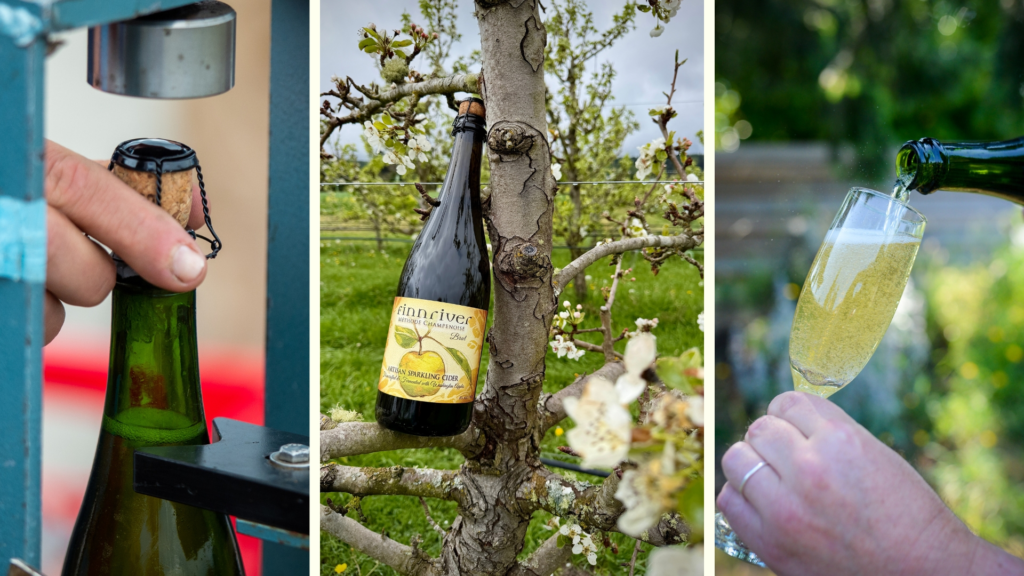
“I love the traditional design of the racks,” Weir says. “They’re beautiful, but also incredibly functional. From there, it’s hands-on work every day — each bottle is lifted and given a small twist, three times a day. When the racks are full, we’re working with about 600 bottles. So morning, midday and end of day, we move through every bottle. Over the course of about six weeks, we gradually bring all the sediment down into the neck.”
The labor is significant, and Weir does not minimize it. “There are times I wish we had more capacity, but it’s always a balance,” he says. “For me, it’s worth it because when done well, it can produce a superior product.”
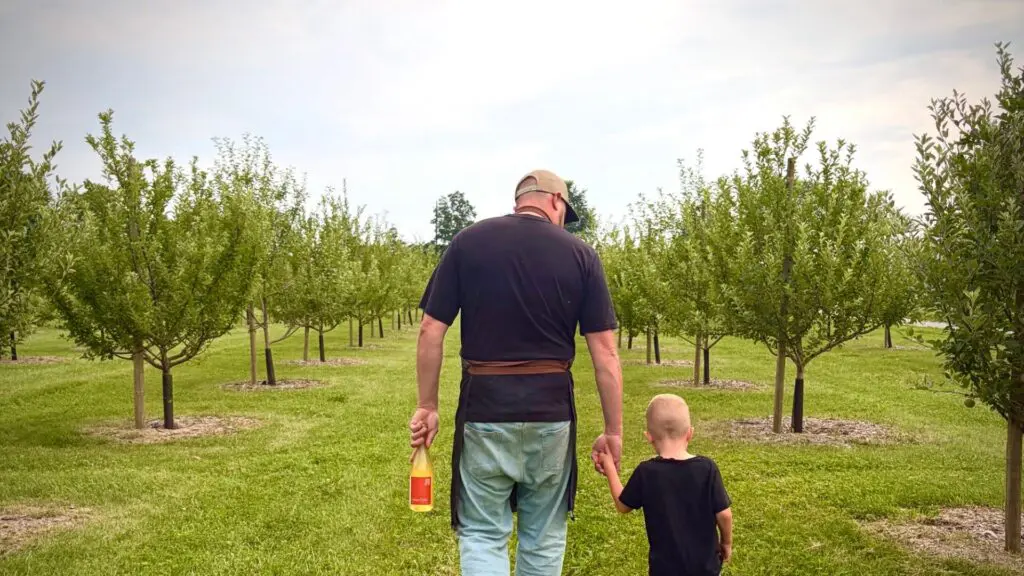
Finnriver is a certified organic farm along a restored salmon stream on the Olympic Peninsula. That land ethic, Weir says, shapes how he thinks about a production method that demands exactly the kind of patience that farming requires. “Organic farming and creek restoration both ask for patience and a long-term investment, often without immediate results,” he says. “If you stand at the edge of the orchard by Chimacum Creek, you can hear the birds and the water moving through. It’s a reminder of why that patience matters. You’re part of a bigger system, and your role is to support it, not rush it.”
The traditional method, he says, asks for the same disposition. “The traditional method is slow by design, and it asks for that same kind of attention and restraint. Sometimes the best things take time, and when you let the process unfold the way it’s meant to, you end up with something that feels more complete and somehow more connected.”
Weir does not frame Artisan Sparkling as a response to what is happening in the wine world. “I don’t really base what I make on trends in the wine industry,” he says. But he welcomes the growing number of producers working in the traditional method across both categories. “The more people working in the traditional method, the better. It’s a labor-intensive process, and it’s good to see it valued. Whether it’s wine or cider, that commitment to craft comes through.”
The recognition problem
Both Léger and Weir are clear-eyed about the obstacle that remains between where traditional-method cider is and where it belongs in the market. The problem is not the product. It is where the product ends up on a menu.
“I think there are more on-premise places every year that have someone who understands the range of cider, but it is still a tiny percentage of beverage directors and wine buyers,” Léger says. The structural reason is familiar to anyone who has watched a new category struggle for legitimacy. “Until cider is ‘on the test’ — part of the WSET program, for example — no one will be ashamed of being as ignorant about fine cider as so many are.”
Weir supports the direction of placing traditional-method cider alongside sparkling wine in how it is evaluated, but with a condition. “I’m generally in favor of that direction, but I think it needs to come with more education,” he says. “While there are similarities, sparkling cider is its own thing. If critics are only trained on sparkling wine, they can miss what makes cider unique.” The ask is not to subsume cider into the wine category, but to develop the critical vocabulary for assessing them alongside each other.
Léger’s prescription for the near term is concrete — to get traditional-method cider onto the sparkling list, not a separate cider list, and certainly not at the bottom of the beer menu. “When positioned as a low-ABV, authentically produced sparkling offering, I think the value becomes self-evident, and the food pairing opportunities are very broad,” she says.
The case for that positioning, she argues, aligns with exactly what the market says it is looking for. “If the trade actually starts to recognize these offerings as the incredible value that they are — and that they have the profile that the market is actually looking for (lower ABV, low or no sugar, small sustainable farms and producers) — there is nowhere to go but up,” Léger says.
The argument worth having
Whether traditional-method cider belongs on the sparkling wine list or in a category of its own is, in the end, a question about how the market is organized — not about what is in the bottle. What is in the bottle, Léger and Weir both suggest, has been ready for a different kind of attention for a long time.
On the Olympic Peninsula and in the orchards of Vermont, the same argument is being made simultaneously — that the traditional method, applied with patience and craft, and honest fruit, produces something worth taking seriously regardless of what it is fermented from. The sparkling wine world and the cider world are finally talking to each other. The results are some of the most interesting bottles in either category. The only thing still being worked out is who is listening.
Traditional method: cider versus sparkling wine
What they share: Secondary fermentation in bottle, riddling to consolidate sediment, disgorgement, extended lees aging, a commitment to labor-intensive craft production.
Where they differ: Apples lack tartaric acid, which means cider doesn’t form the crystals that require precise riddling. Eden shakes bottles and stores them inverted in cartons rather than using traditional riddling racks.
What to drink
For readers ready to explore traditional-method cider firsthand, these two producers represent the range and depth of what the category is producing in the Pacific Northwest and New England.
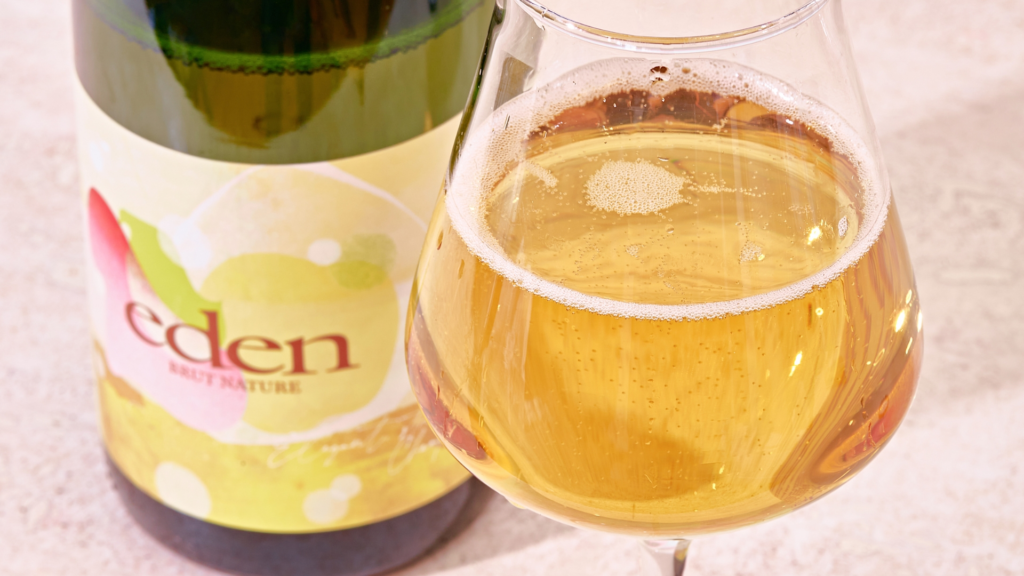
Eden Specialty Ciders Traditional-Method Sparkling | Newport, Vermont
Bottle-fermented, disgorged by hand, made from heirloom and tannic apple varieties selected and blended for balance.
edenciders.com
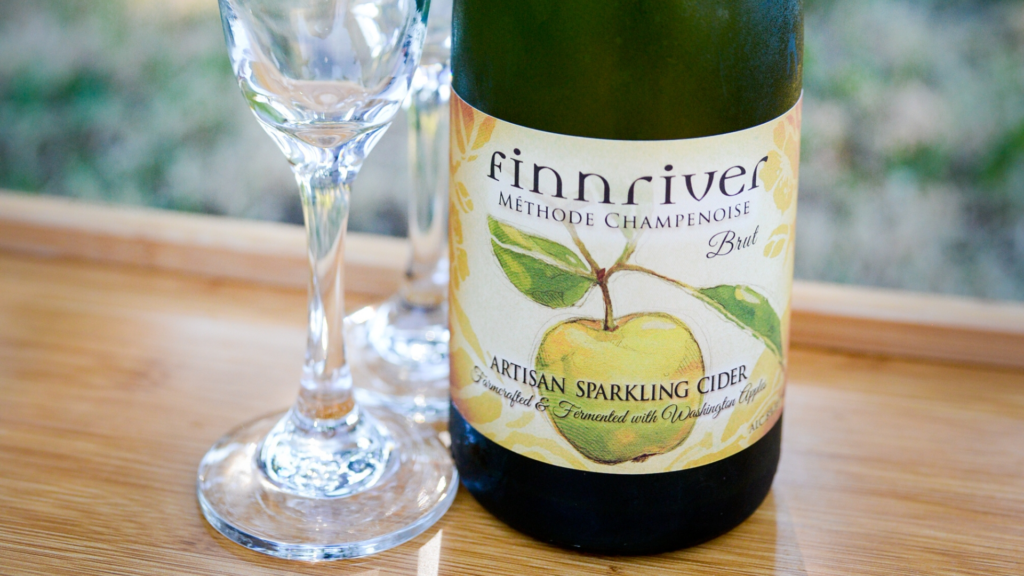
Finnriver Artisan Sparkling | Chimacum, Washington
Full traditional method with secondary fermentation in bottle, riddled and disgorged by hand on racks built by a local boat-builder. Made on a certified organic farm along a restored salmon stream on the Olympic Peninsula.
finnriver.com