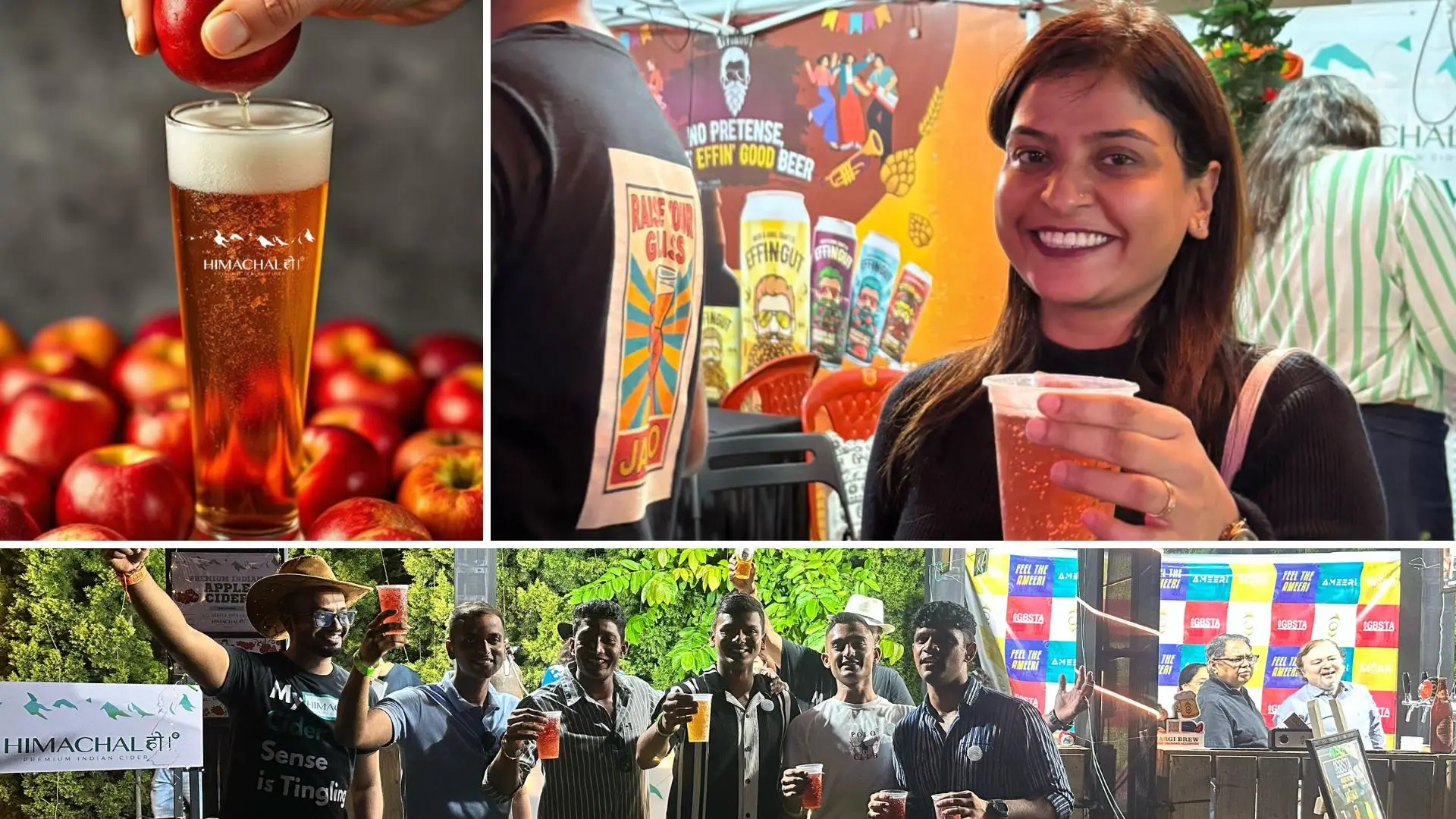
Himachal Ho! started with a conversation over Indian food in Yorkshire. Now it’s pouring in the Indian state of Maharashtra.
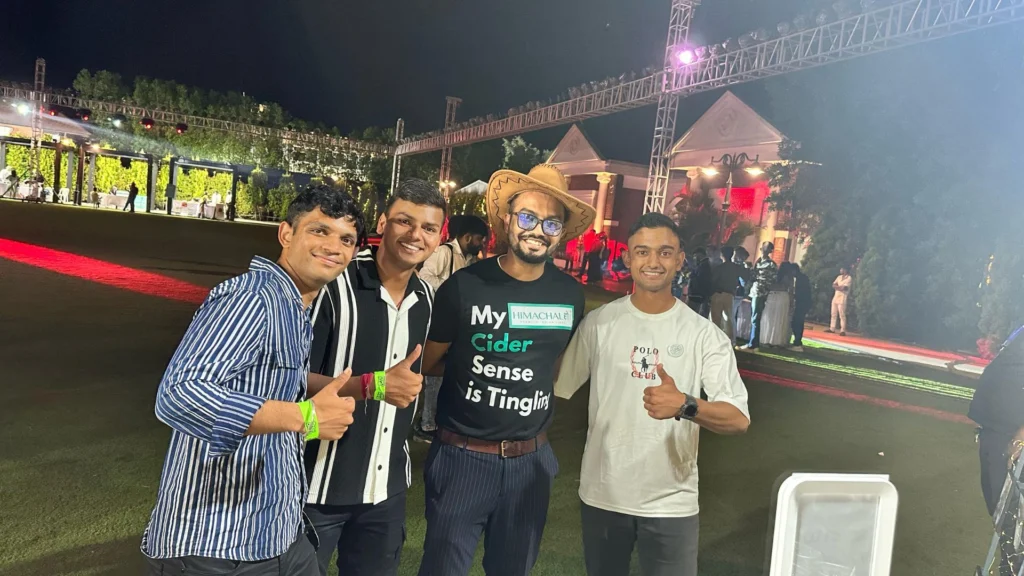
At Oktoberfest in Mumbai, India, people stopped at the Himachal Ho! stand and ordered a glass to see what an Indian apple cider tasted like. “Attendees who initially ordered a single glass out of curiosity routinely returned to purchase multi-glass rounds for their groups,” says co-founder Rohan Fernandes. By the second day of the three-day festival at Jio World Drive, he says, the stand had run out.
The apples had always come from India. But the first batches went to Britain, and it took more than a decade, including a break in production, for the company to start pouring in India.
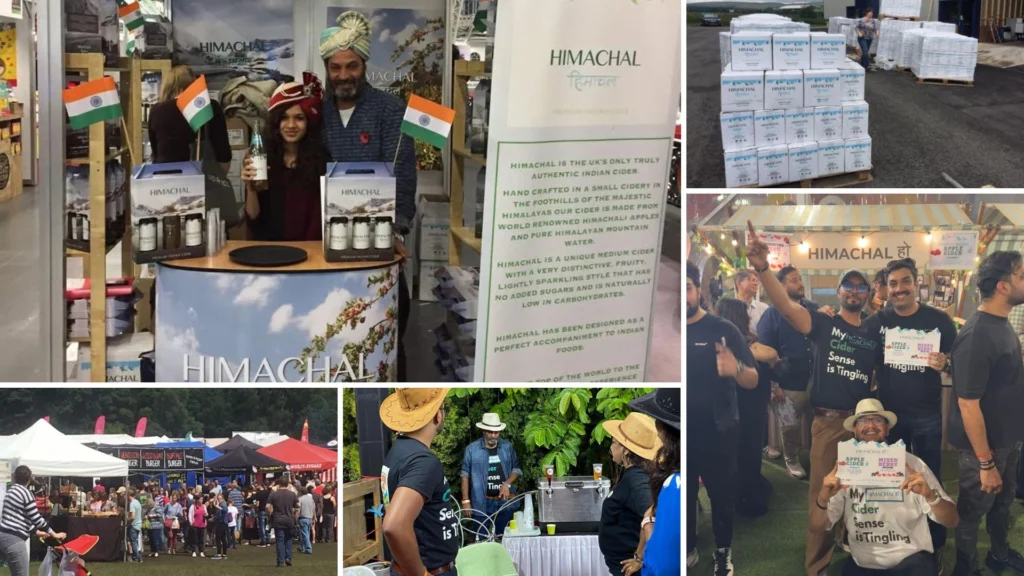
The idea dates to 2012, when Clive Fernandes, who now oversees cidermaking and quality for Himachal Ho!, was eating Indian food with British colleagues in Yorkshire, England. The conversation turned to what they wanted to drink with it. He thought the brisk acidity and fizz of cider would be welcome between bites of chile and rich gravy. Soon thereafter, he went on to start the original business with David White in Lancashire, England. The search for apples and someone to ferment them took the team to Himachal Pradesh in India’s Himalayan Mountains.
Finding a production partner in India, Rohan Fernandes says, was “an exercise in persistence, knocking on doors.” In the orchards of Shimla, Kullu and Kinnaur, the team tested how much juice they could press from varieties such as Royal Delicious and Golden Delicious and compared their sugar and acidity. They worked alongside growers and processors, he says, “who were used to sending everything straight to the fresh-market table.”
The team spent months trying different yeasts and adjusting fermentation temperatures. Then came a small batch that poured light gold, with what Fernandes calls a “crisp, naturally tart apple bite.” The finish, he says, didn’t taste cloying or heavy. That was the batch that convinced the team it had a cider worth bringing to market.
Britain gave them an audience that understood cider and knew what it liked. The cider was fermented, bottled and labeled by hand near Shimla, India, before being shipped to Britain, where the team poured samples for buyers unfamiliar with cider made from Himalayan eating apples. It made it to Michigan, too, earning a bronze medal in the Unlimited Cider and Perry category at the 2017 Great Lakes International Cider and Perry Competition.
When restaurants closed during the Covid-19 pandemic, Himachal Ho!’s shipments to Britain dried up and the team stopped making cider. Four years later, the cider was back. In 2024, the team relaunched under Clida Bev and began pouring it on tap in Maharashtra, the second most populous state in India.
The Indian launch brought two ciders to the tap. The original is lightly sparkling and medium-sweet. For the mixed berry version, called Berrylicious, the team keeps the same fermented apple base. “Real berry extracts and natural juices are blended into the fermented apple base,” Fernandes says. He describes the result as a “slightly sweeter, and fruitier drink option,” with a tart edge.
Clive Fernandes oversees the work at partner facilities in Shimla and Pune, India. The apples are cold-pressed in Himachal Pradesh, and the team adds Himalayan spring water to adjust the juice’s starting sugar concentration. The juice ferments slowly at controlled temperatures. The cidermakers stop fermentation “at a specific gravity point,” Rohan Fernandes says, leaving some of the apples’ own sugar in the cider. He puts the alcohol at about 4.5 to 5 percent. The cider then rests before it’s filtered, carbonated and kegged.
Fernandes says the original recipe has stayed broadly the same since its British release. The conversation at the bar is different. In India, he says, some customers “initially assume cider is either non-alcoholic apple juice or compare it directly to craft beer, flavoured seltzers or sparkling wine.” He’s found that how it’s served matters, too. “Serve temperature is critical,” he says. “Consumers expect it ice cold.”
For now, Himachal Ho! is on draft in the Indian cities of Mumbai, Pune and Nashik, with bottles in the works. Fernandes handles distribution and excise approvals, which means getting the cider into a new state can take considerably longer than getting it onto another tap in Pune. “Each Indian state functions as a separate market,” he says. There are licenses to secure, labels to get approved and taxes to work out.
Ask Fernandes what he’d put on the table with the original and he’ll suggest tandoori starters, a rich curry or thecha paneer. The green chile relish brings the heat, the paneer brings the richness, and the cider, served ice cold, gives you a little of that tart apple bite before you go back for more.