Botanist & Barrel is reshaping Southern wine and cider by championing a model that treats land, people, and flavor as one system
In the American South, where wine culture has long been overshadowed by coastal regions, Lyndon Smith is building a different model. On Smith’s Cedar Grove farm, waste is treated as a design flaw.
Fruit skins, stems and pulp are not discarded. They are repurposed. Even mistakes are not erased. They are learnt from and are folded back into the system as lessons.
Smith’s agricultural worldview predates Botanist & Barrel’s founding. He spent childhood summers foraging on his grandparents’ farm. “We were always foraging,” Smith says. “Red currants, raspberries, blackberries. That never really left me.”
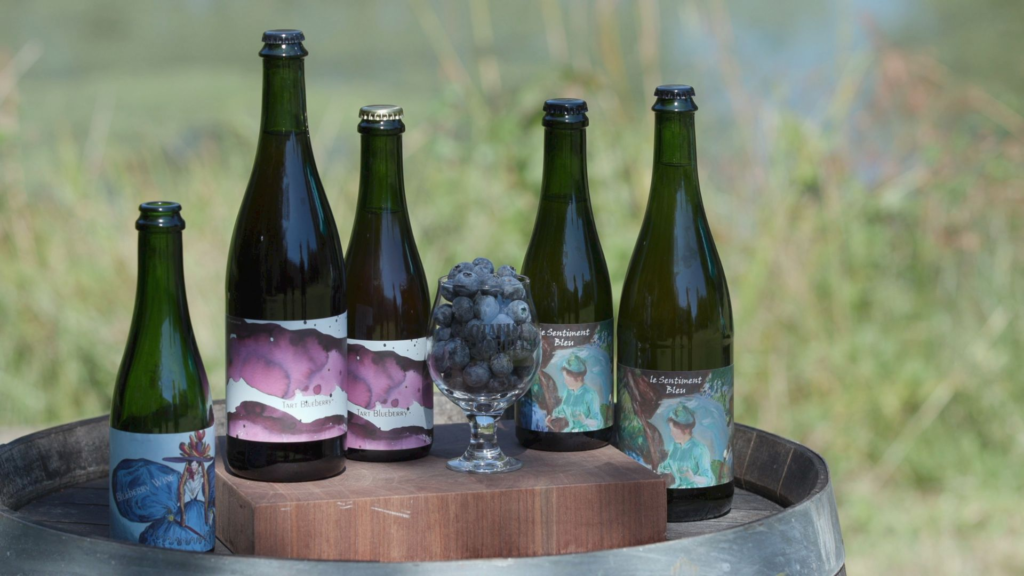
Even after detours into startups and a decade in archival film, the pull of the soil remained. “I always knew I wanted to be back in the dirt,” he says. That circular way of thinking now defines Botanist & Barrel, the North Carolina winery and cidery Smith co-founded in 2017 with his sister Kether Smith and partners. Today, the company is widely regarded as the South’s only fully natural cidery and the first to introduce pét-nat cider to the Southeast, helping shift national perceptions of what Southern fruit can achieve in serious wine and cider production.
The ciders and wines are wild-fermented, unfiltered, never pasteurized and made exclusively from spray-free heirloom apples, muscadines and blueberries grown on the family farm or sourced from neighboring growers who farm with the same standards.
Smith’s core belief is disarmingly simple: use the whole farm and the whole fruit.
That belief governs everything from orchard management to fermentation to packaging. Pomace becomes spritzers. Spent materials become compost. Nothing is treated as a dead end. “It’s never left me, this idea that if you’ve got something, you should figure out how to use it,” he says. “Almost like a guitar. You don’t just throw it away.”
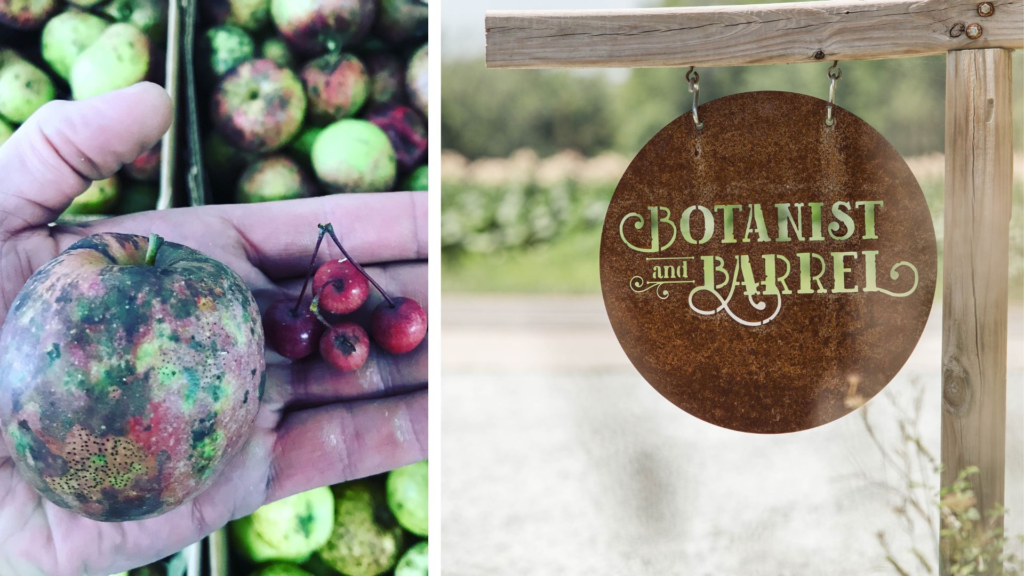
Smith identifies deeply as a Southerner, even though his family history is layered. “My sister and I are first generation here,” he says. “But I’ve lived here my whole life. This is home.”
That identity informs his approach to fruit, particularly muscadine grapes, long dismissed by mainstream wine culture as rustic or unsophisticated. “If you grew up here, muscadines are just part of who we are,” Smith says. “Fresh muscadines, muscadine jelly, muscadine wine. It’s in the culture.”
Rather than abandon the fruit in favor of international varieties, Smith chose to reinterpret it, positioning muscadine not as a novelty but as a legitimate expression of Southern terroir.
“We’re presenting it in a way where people can actually see where it comes from,” he says. “Not just, ‘Here’s this thing in a bottle.’ But here’s the soil, here’s the people, here’s the place.”
For Smith, terroir is the intersection of land and human choice. “There’s the soil and the fruit, that’s one part. And then there’s us, and the choices we make. We want those two things to exist together.”
That philosophy shapes Botanist & Barrel’s entire portfolio, from everyday table bottlings to its flagship Less Is More series, which Smith describes as a yearly snapshot of a single orchard, designed to express vintage variation rather than house sameness.
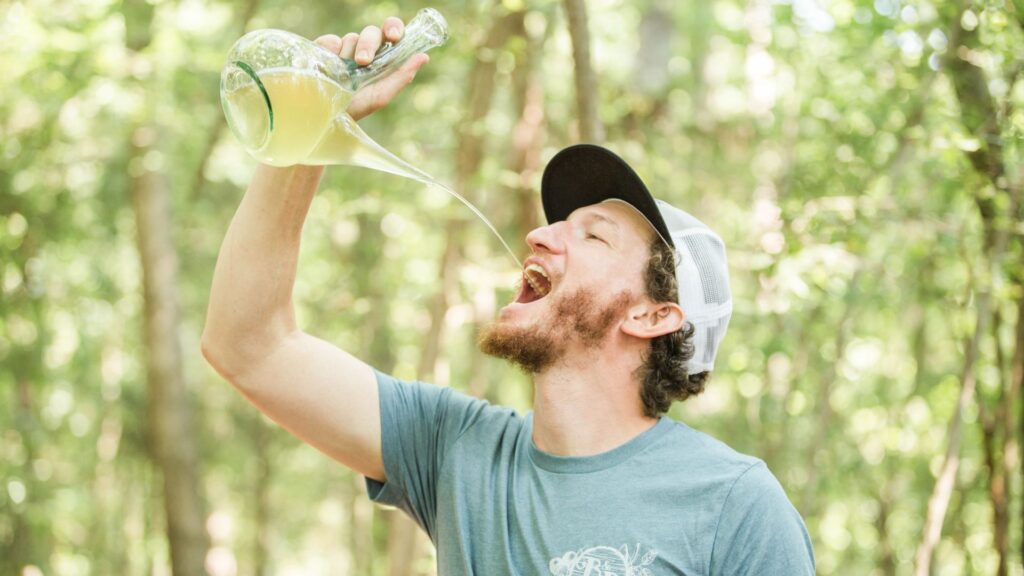
“It’s a moment in time,” he says. “That year, that place, that fruit.”
Smith’s years in archival film taught him to work with what already exists rather than impose something artificial. That mindset carried directly into fermentation. “In film, you use what’s already in front of you,” he says. “That’s the same way we think about fermentation.”
Native yeast, wild fermentation and minimal intervention are not aesthetic choices for Smith but philosophical ones, particularly in the Southeast, where humidity, heat and disease pressure make low-intervention farming far more technically demanding than in cooler regions.
“Muscadines don’t require human intervention the way other grapes do,” he says. “They grow here naturally. So why force them to behave like something else?”
This approach requires comfort with unpredictability. Smith acknowledges the risk but believes flavor depends on it. “We’re still selecting what goes into the bottle,” he says. “But there’s something undeniable that happens when you let a place speak.”
Botanist & Barrel’s production system is intentionally circular. Smith thinks constantly in terms of cycles rather than outputs.
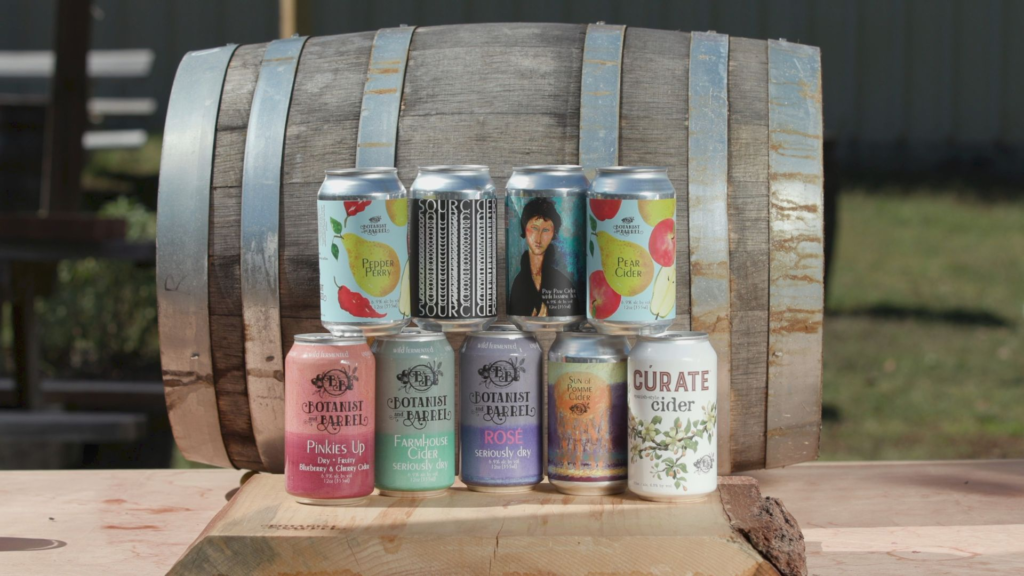
“Every last detail of what we’re doing, we’re thinking about what happens next,” he says.
Fruit waste becomes new beverages. Production remnants become compost. The farm feeds itself. This systems-level thinking places Botanist & Barrel within a broader global shift toward regenerative production, where sustainability is increasingly tied to long-term economic resilience.
In 2023, Smith suffered a severe burn accident that forced him to step away from physical farm labor for months. Recovery was slow, painful and psychologically disorienting.
“For someone who farms, not being able to move fast is terrifying,” he says.
The injury coincided with hurricane damage on the farm, compounding physical and emotional strain. The experience forced Smith to confront a long-standing habit in hospitality culture: hiding struggle.
“We were making really good wine and never telling anybody what we’d been through,” he says.
He realized that silence was not strength.
“Vulnerability builds community,” Smith says. “We don’t need to pretend everything is fine all the time.”
The experience reshaped how he leads.
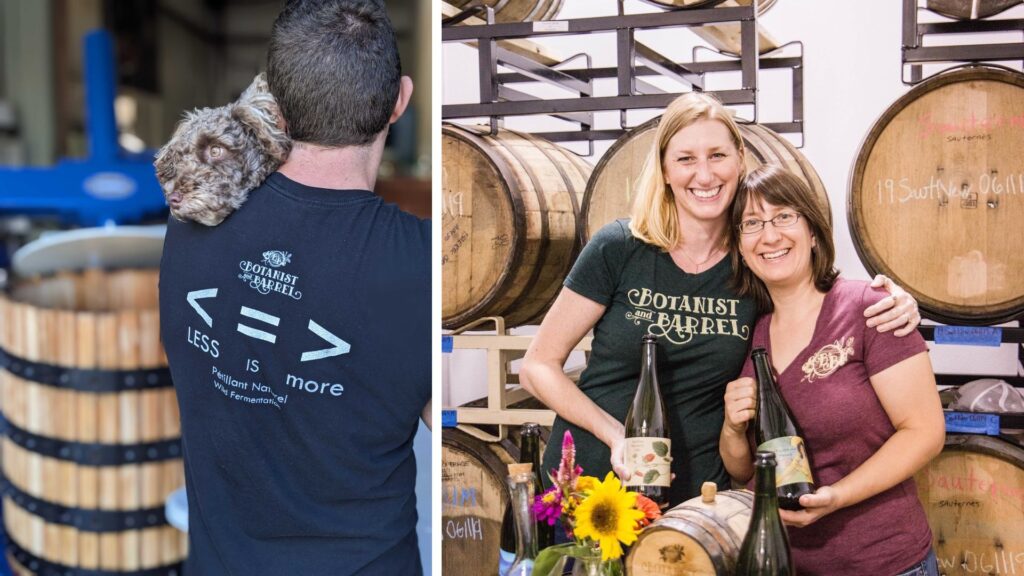
“It taught me resilience isn’t just endurance. It’s letting people in.”
Smith believes Southern drinking culture has always been communal rather than hierarchical. “It’s about togetherness. I want to share this with you,” he says. “It’s unapologetic. It’s like a big hug.”
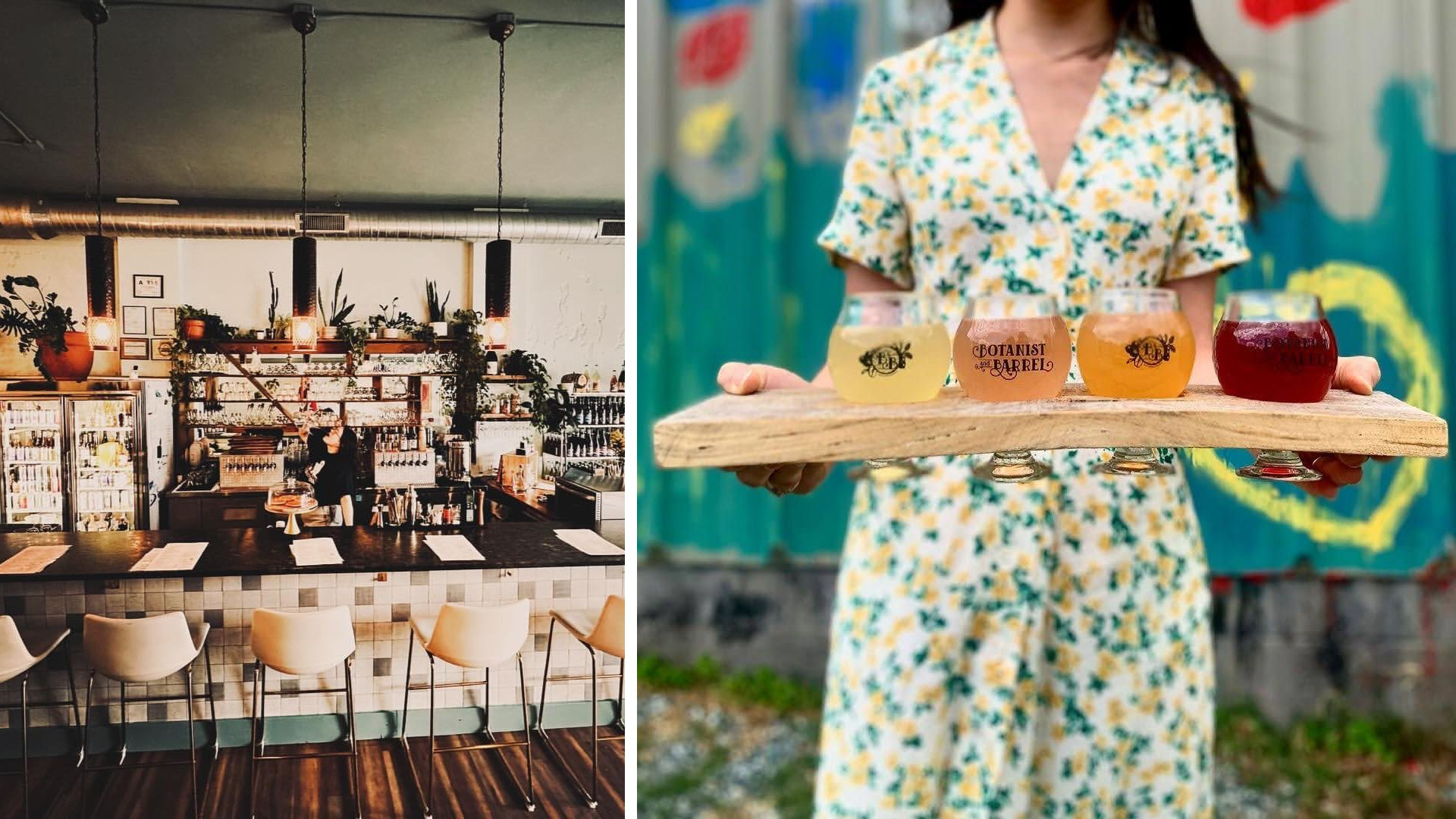
That ethos runs through Botanist & Barrel’s public-facing identity. The cidery and winery is not only a production site but a gathering place, with tasting spaces in Asheville and Cedar Grove that function as community hubs as much as commercial outlets.
“What began as a dream became a place for people to come together,” Smith says.
In 2024, Wine Enthusiast named Smith to its Future 40 list for his advocacy of muscadine wine and low-intervention Southern farming. He views the recognition not as personal validation but as momentum for a broader shift in American wine. Smith believes deeply in collective resilience. “Doing everything alone is lonely,” he says. “There’s a community out there if you let it exist.”
Smith’s long-term vision prioritizes regional depth over scale. More farms rooted in place. More producers using what already grows around them. More drinkers who “taste real geography, not just branding. American wine does not need to emulate Europe or California to be serious.
“When nothing is wasted, not fruit, not soil, not even hardship, the farm becomes more than a business,” Smith adds. “It becomes a system that sustains itself.